Due to a recent change in our pharmacy software system, the process for submitting refill requests online has now changed.
Our previous mobile app and your current login credentials will no longer work.
Please click the Refill Prescriptions tab to begin the new process.
Thank you for your patience during this transition.
Get Healthy!
- Posted February 6, 2026
Air Ambulances Linked to Higher Survival After Severe Injuries
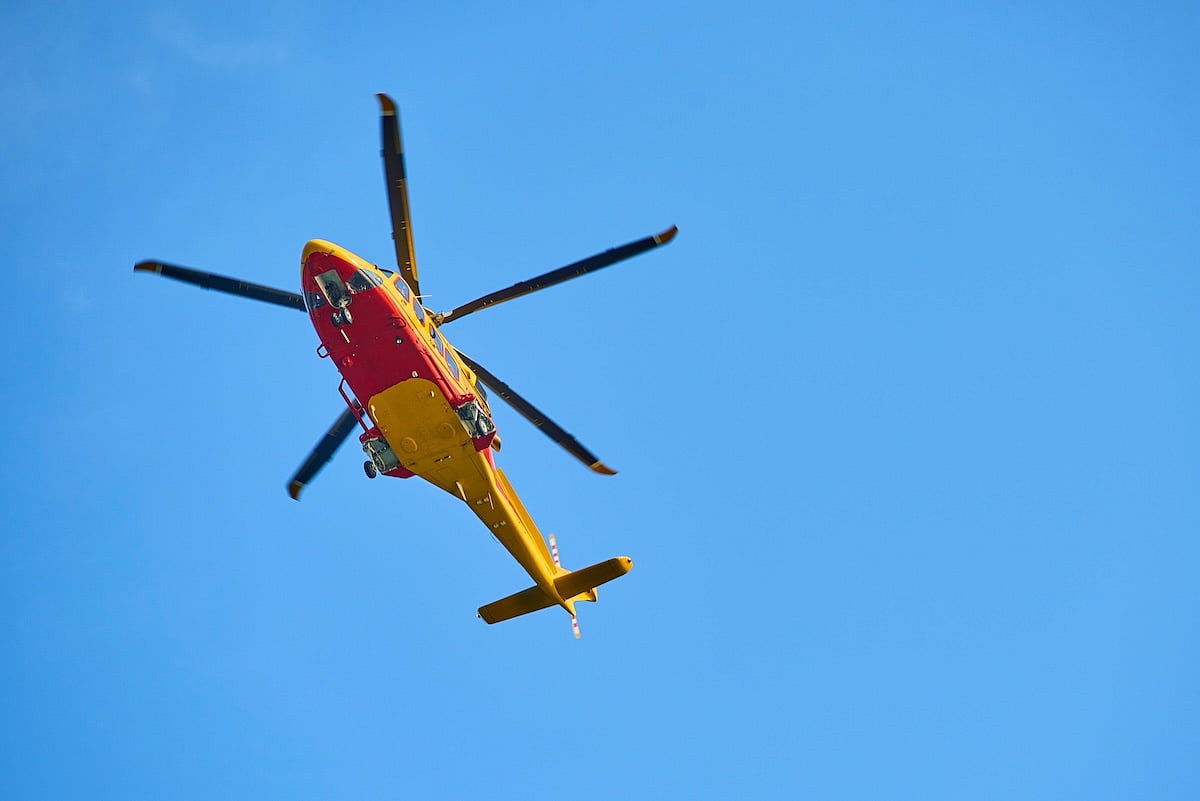
People with life-threatening injuries may have a better chance of surviving if care arrives by helicopter, a new U.K. study suggests.
Researchers looked at nearly a decade of data from an air ambulance service in southeast England and found that trauma patients treated by helicopter crews survived at higher rates than expected.
The findings -- recently published in the Emergency Medicine Journal -- show that for every 100 seriously injured patients who received this type of care, five more people than expected survived.
The research team reviewed outcomes for 3,225 trauma patients treated by a single Helicopter Emergency Medical Service (HEMS) team serving Kent, Surrey and Sussex between 2013 and 2022.
Using a statistical method that estimates a patient’s chance of survival, researchers compared expected outcomes with what actually happened.
They found that 85% of patients were alive 30 days after injury, compared with an expected rate of 81%.
That difference, researchers said, adds up to roughly five extra survivors for every 100 patients, which could mean as many as 115 additional lives saved each year, based on a typical caseload.
Patients with very severe injuries appeared to benefit the most.
Among those with only a 25% to 45% predicted chance of survival, 35% were still alive after 30 days. Even patients with less than a 50% expected chance of survival showed strong outcomes, with 39% surviving.
Younger patients and those who scored higher on the Glasgow Coma Scale -- a test that measures consciousness after brain injury -- were more likely to survive against the odds.
Another factor tied to better outcomes was pre-hospital emergency anesthesia. The treatment, which puts patients into an induced coma, can only be given by advanced teams like HEMS.
The study also looked at 1,316 patients who went into cardiac arrest after traumatic injuries.
Of those, 356 patients (27%) regained circulation while being transported. One month later, 46 of these patients (25%) were still alive.
The chance of restoring circulation rose by about 6% each year from 2013 to 2022, the study found.
The authors stress that the results do not prove helicopter care caused this increase in survival. Other factors could also be involved.
Still, they wrote that the findings show "the potential magnitude of clinical benefit, consistent with previous economic and social benefits demonstrated in previous studies."
"These findings provide supportive evidence for continued investment in HEMS, particularly for severely injured patients, though comparative studies with alternative care pathways are needed to establish causal effectiveness," the researchers concluded.
The study was led by Joanne Griggs of Air Ambulance Kent Surrey Sussex in the U.K.
More information
EpiGuard has everything to know about air ambulance medical transport.
SOURCE: BMJ Group, news release, Feb. 5, 2026
